
If you have heard the term interceptive orthodontics and wondered if it applies to your child, you are in the right place. Interceptive orthodontics means we step in early, usually while baby and adult teeth are both present, to guide jaw growth, create room for permanent teeth, and prevent small issues from becoming complicated later.
Dr. Timock and Dr. Mioduski use thoughtful planning and light-touch tools to keep growing smiles on track at our Fort Collins office at Timock Family Orthodontics and our Windsor office at Northern Colorado Orthodontics.
What We Mean By Interceptive Orthodontics
Early orthodontic care is not about putting full braces on a first grader. It focuses on growth guidance and problem prevention during the mixed dentition years. This stage gives us a window to influence how the jaws grow and how the adult teeth erupt. Acting during this window can reduce or simplify orthodontic treatment during the teenage years.
Problems that benefit from early attention include:
- Crossbites of front or back teeth that shift the jaw to one side
- Narrow upper jaws that crowd adult teeth before they even arrive
- Severe crowding that traps or misdirects incoming teeth
- Front teeth that stick out and risk chipping during play
- Persistent thumb or finger habits that change jaw shape
- Early loss of baby teeth allows neighbors to drift into the wrong spot
- Lower jaw growth patterns that point toward an underbite
Each child grows differently. Dr. Timock and Dr. Mioduski evaluate growth patterns, dental development, and airway considerations, then tailor a plan that fits your child’s needs and temperament.
The Right Time To Begin Interceptive Orthodontics: Why Age 7 Matters
Most families hear about the first orthodontic check around age seven. By that age, enough adult teeth have arrived to spot crowding, crossbites, and growth trends..
If your child is older than seven, do not worry. The “right time” is any time you have a concern, your dentist notices a developing issue, or your child shows signs like mouth breathing, a crossbite, or difficulty chewing. Children begin care at a range of ages, and each plan reflects the child’s current growth stage.
What A First Visit Looks Like In Fort Collins Or Windsor
You can plan on a friendly, information-rich visit that answers your questions and gives your child a positive start.
Conversation and exam
We ask what you see at home, what your child’s dentist has noted, and what your goals are. Then we check jaw function, bite, oral habits, and how the teeth are erupting.
Photos and low-dose imaging
Growth-focused X-rays help us see developing teeth and root positions. Photos document today’s baseline so you can compare progress later.
Growth and eruption review
We walk you through the timing of adult teeth, where space is tight, and how the jaws are growing. This shows why we recommend early care or monitoring.
Clear plan and timeline
You leave with the next steps, cost details, and an expected timeline. If we recommend no treatment, we schedule growth checks so you do not feel like you are guessing.
Three Possible Paths After The Visit
After the exam and records review, the plan typically follows one of three paths. The choice depends on growth pattern, eruption timing, habits, and the specific bite issues we identify.
Watchful monitoring
Many kids only need periodic check-ins while nature does the heavy lifting. We track growth at intervals so we can act at the best moment if something changes.
Short, focused treatment
Some children benefit from a defined program that usually lasts several months to a little over a year. The goal is specific, for example, correcting a crossbite, creating room for blocked-out adult teeth, or stopping a habit that reshapes the palate.
Coordinated care
If we see concerns outside orthodontics, for example, long-standing mouth breathing, we may coordinate with your pediatric dentist or physician. The aim is a stable, comfortable bite supported by good daily function.
Common Phase One Tools And What They Do
We choose the simplest tool that can accomplish the job. Here are the most common options and how they help.
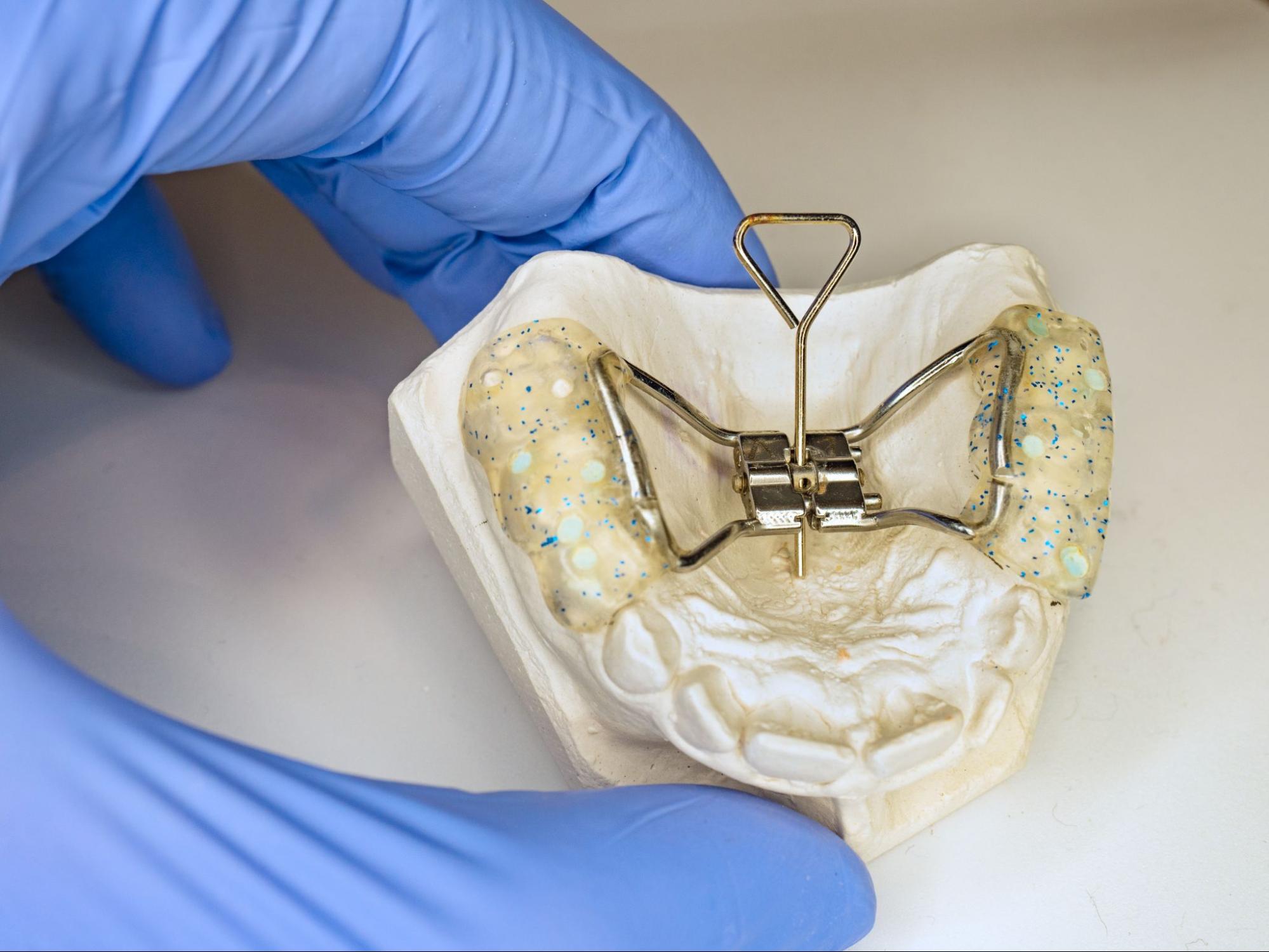
Palatal expander
A narrow upper jaw can cause crossbites and crowding. Gentle expansion widens the palate, increases space for adult teeth, and helps the upper and lower jaws fit together better. Families often see changes within weeks.
Space maintainer or lower holding arch
When a baby tooth is lost early, its neighbors drift. A small, comfortable appliance preserves the space so the adult tooth can emerge into the right position.
Limited braces or partial aligners
A short run of braces or selected aligner trays can align a few front teeth, relieve traumatic bites, or help erupt teeth that need guidance. We limit the scope to the problem at hand.
Habit appliance
Gentle reminder appliances help break persistent thumb or finger habits that narrow the upper jaw and shift the bite.
Guidance of eruption
Sometimes the best tool is a very simple one, such as removing a stubborn baby tooth at the right time so a blocked-out adult tooth can move into place.
No matter the tool, comfort and clarity matter. We show your child how everything works, share a simple at-home routine, and check progress often.

How Interceptive Care Affects Later Treatment
Parents want to know if early care replaces braces later. The honest answer is that it depends on the problem. Interceptive orthodontics can:
- Shorten or simplify the teenage treatment
- Reduce the number of permanent teeth that need removal
- Improve jaw balance and help protect front teeth from chips
- Make later alignment focus on fine-tuning rather than major corrections
Some kids still need a finishing phase in middle or high school. That later phase typically moves faster and feels easier because early care solved the structural roadblocks.
Time, Cost, And Practical Details
Early treatment is designed to be focused. Many programs last six to twelve months, though some are shorter and others take a little longer based on goals. We review fees and payment options in clear terms before anything begins.
We also plan around real life. If your family shuttles between Old Town Fort Collins activities, CSU games, and evenings by the lake, our teams coordinate appointment times that fit your week. Adjustments are quick, and most kids return to school or sports right after their visit.
How Parents Can Help At Home
Small habits make a big difference in comfort and results. Use these tips to keep things smooth.
- Keep a soft travel brush and a small case in your child’s backpack for after-school cleanups.
- Use a mirror during brushing to check around brackets or an expander.
- If an appliance feels different after an adjustment, serve softer foods the first evening.
- Encourage water during sports, especially on the Poudre River Trail or at Boardwalk Park, since sugary drinks increase plaque around appliances.
Call us if you notice a loose band, a pokey wire, or a new habit like cheek biting. We would rather make a quick fix than let something rub.
Why Families In Northern Colorado Choose Dr. Timock And Dr. Mioduski
Expertise and access matter when you choose a partner for your child’s growth years. Dr. Timock and Dr. Mioduski have extensive experience guiding growth for children across the Front Range.
You can visit us in two convenient locations: our Fort Collins office near the Harmony corridor and our Windsor office at Northern Colorado Orthodontics, close to Windsor Lake. Families appreciate clear communication, kid-friendly visits, and customized treatment that is right for you.

Do You Have Questions About Interceptive Orthodontics?
Schedule a consultation with Dr. Timock or Dr. Mioduski at our Fort Collins office at Timock Family Orthodontics or our Windsor office at Northern Colorado Orthodontics.